
Domestic Cleaning in Greenwich
Tell us where you have carpet, tile or another floor finish and which rooms need the most attention. We can agree how to work around those differences on regular visits.
- Identify each floor finish and any care notes
- Agree frequent work and space for occasional jobs
- Keep the route out clear for the last floor pass
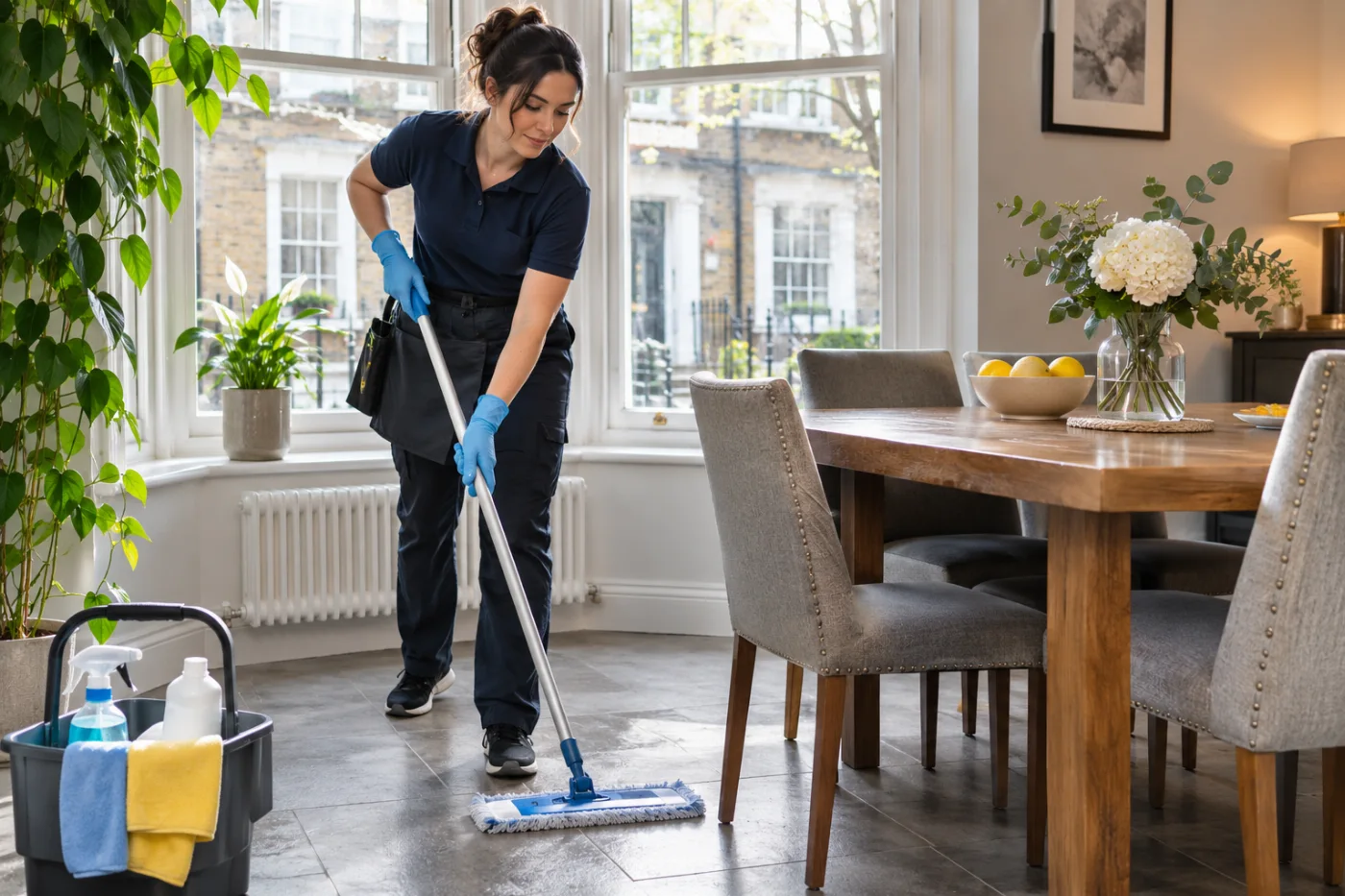
Regular cleaning in Greenwich
If the floors change as you move through your Greenwich home, describe where each material starts and ends. An entrance with a tiled area, a carpeted staircase and a timber floor can need different treatment and equipment within one visit. It helps to know which floors are the priority and which are available. If a floor finish is uncertain, send a photo or any product instructions before the work is agreed.
Think about which rooms see the most use. The hall may bring in loose grit during the week while a guest bedroom does not need the same attention. On a shorter visit, you might keep the hall and kitchen on the list, then alternate the lounge edges with the spare room. We can discuss that at the first booking rather than trying to cover the entire property every time.
Share your full address, preferred time and how the cleaner reaches your door. If equipment needs to be taken between levels or through a shared passage, describe the actual route and where it can be put down. This lets us agree a suitable plan for your particular home rather than assume two properties with similar postcodes have the same access.
What we clean in your home
We agree household surfaces and floors by room. Wiping a reachable shelf, cleaning the outside of a unit and vacuuming an open floor can belong to one visit, provided the space is available. List items you do not want handled and tell us whether to leave a room until a later appointment. Where possible, surface work is completed before the floor below it.
Floor transitions are worth pointing out. Tell us where a hard floor meets a rug, a carpeted stair or a room with a different finish. Say if the runner should not be shifted or if the threshold is loose. We can discuss cleaning the accessible areas with an appropriate method for each surface, and agree what cannot be reached behind fixed or heavy furniture.
- Identify the finishes and thresholds on the cleaning route.
- Agree any furniture or rugs that need to remain in position.
- Put the rooms that collect the most dust or grit first.
Kitchen and bathroom cleaning
Kitchen surfaces and floors
In the kitchen we can agree reachable worktops, splashbacks, sink, taps, fronts and handles. Tell us whether the hob will be cool and which parts of the counter can be reached around appliances. If a particular product is intended for the worktop, give us its instructions. The worktop and kitchen floor may both look like stone but need different care. Label the products for the intended surfaces if you provide them.
After the agreed surface work, we remove loose material from the available floor and discuss an appropriate clean for its finish. If the kitchen floor continues into the dining area, identify whether the finish is the same there and whether both parts are on the booking. Where the floor needs to stay available for someone using the back door, tell us so we can discuss the point when the route can be finished.

Bathroom fittings and floors
For bathroom work, list the agreed basin, taps, toilet, bath or shower, mirror and floor. Tell us about any natural stone, treated glass or delicate fittings. If you are supplying a particular product for the bathroom tiles, explain where it can be used and which surfaces should be avoided. Move toiletries from the edge you want reached or mark the part that should be wiped around.
A bathroom mat should be mentioned if it must stay in place or if the exposed floor beneath it needs to be cleaned. For a floor used before the appointment ends, explain when it will be available and whether it needs time to dry. A loose seal or a damaged tile should be flagged so we can agree what can be reached and what needs maintenance rather than cleaning.

Bedrooms and living areas
In a living area with a rug on top of a hard floor, tell us whether the rug is to stay in its current position. We can discuss vacuuming its accessible face and using a different method on the exposed hard floor. If a rug edge curls or the backing is delicate, point it out. We can agree which surfaces around the sofa and tables should be dusted before doing the floor.
In bedrooms, give us the reachable ledges, furniture exteriors and exposed flooring you want on the list. If a bed is on a carpet and only the outer edge is available, name the space that can be reached without moving it. If a spare bedroom is a rotating job, agree whether it needs the floor every time it comes up or whether the shelves are the priority that day.

Arrange regular visits
Decide whether weekly or fortnightly visits suit your household and what needs attention between them. Keep the frequently used floors on a clear list. Tasks such as vacuuming under a clear dining table or wiping the reachable skirting might be done when you have time to prepare the area first. We can check availability and agree how long the routine work is likely to need.
For a rotation, name the task rather than the whole room. A note that says to vacuum the stair runner this time and dust the reachable landing surfaces next time is easier to follow than a general request to focus upstairs. If a new floor is fitted or a product changes, update the notes before the next appointment. Tell us which instructions still apply to the original material.
- Keep frequent floor work separate from lower use rooms.
- Use a short note for jobs that alternate between visits.
- Update the surface instructions when you change a finish or product.
Agree what fits into each visit
Discuss the work on your priority list before the first visit. The examples below show how regular, rotating and separate jobs can be arranged.
| Floor or transition | Work to discuss for the regular list | Detail to provide |
|---|---|---|
| Entrance tile next to carpet | Remove grit and use a suitable method on each section | Any damaged grout or loose strip at the changeover |
| Rug on hard floor | Vacuum the accessible rug and clean exposed flooring | Whether the rug can be shifted or should stay put |
| Coated timber in a bedroom | Remove loose dust and clean using agreed care instructions | The finish, preferred product and areas to avoid |
| Shared route through the kitchen | Finish the clear floor when foot traffic ends | The last time someone needs to use the route |
Additional cleaning services
Rug cleaning
Ask separately if a rug needs more than ordinary vacuuming. Give the material if known, approximate size, and where the mark or build-up is.
Carpet cleaning
Describe the fitted carpet and the affected areas if loose debris is not the only problem. Tell us about any products already used on it.
One-off cleaning
If you need several occasional tasks dealt with together, ask about a separate visit. Give us the list rather than expecting it all to fit into the regular rotation.
Access and practical arrangements
Explain which entrance will be available, the person who can let the cleaner in and which way equipment can go to another level. If you want the main passage finished last, tell us how to leave through it or whether there is a different agreed exit. Avoid leaving equipment behind a door that someone is going to close during the visit. Show us where supplied items are meant to go back afterwards.
If you have a specific cloth or tool for a floor, leave it where it can be identified and explain which surface it is for. Give us a contact for access or changes and tell us about a pet that needs a door to stay shut. Where you will not be home, confirm how a key will be collected and returned before the visit.
- Share the full address and route for bringing equipment in.
- Identify supplies suitable for each surface and where they are kept.
- Agree the key return and the floor route to finish last.
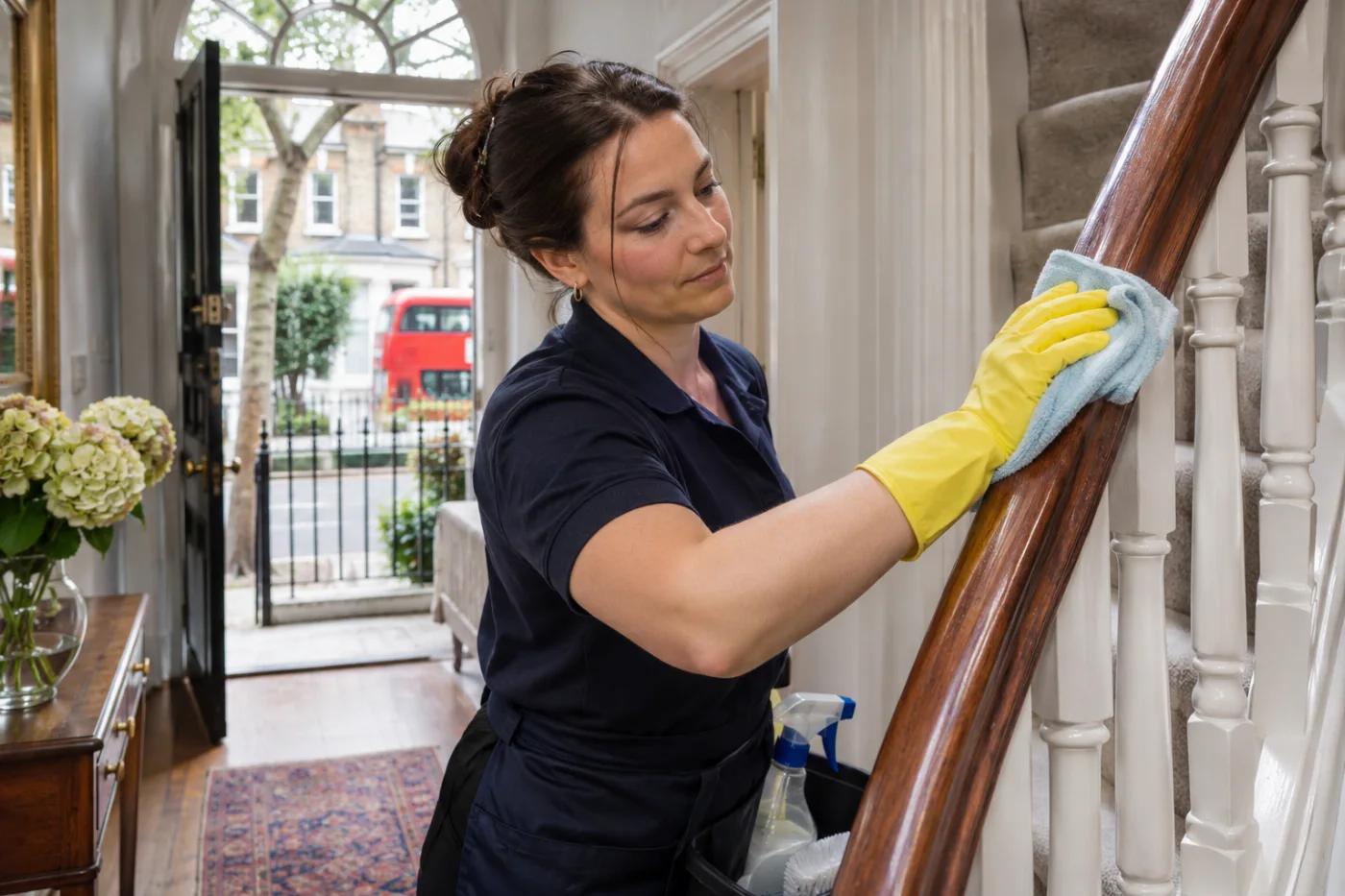
Questions before booking
Can you clean the wood around a rug without moving it?
Yes, tell us that the rug will stay where it is and give the care instructions for the exposed wood. We can agree which edges are reachable.
What if the kitchen floor and hall need different products?
Tell us the finish and instructions for both. Mark which product belongs to each area so we can discuss cleaning them separately.
Can the stairs be done on every second visit?
Let us know the interval you want and whether the stairs have a runner or other finish. Put the job on the rotating list and confirm when it is due.
How do I explain a floor that changes material halfway through a room?
Show us where it changes and identify both materials if you know them. Point out the threshold or edge so we can agree which method is suitable on either side.
Can someone keep using the kitchen while other floors are cleaned?
Tell us what time you need to use it and which other rooms are free. We can discuss leaving the kitchen floor until the traffic through it has finished.
Should a loose stair strip be added to the cleaning notes?
Yes. Tell us where it is and whether it affects the route around the home. We can agree how to avoid disturbing it and you can ask the property contact about securing it.
Nearby areas
See London coverage or review the domestic cleaning service.
Book domestic cleaning in Greenwich
Send your Greenwich postcode, preferred frequency and a list of the floors you want included. Tell us which rooms to rotate and which care instructions apply so we can discuss the appointment.
Domestic cleaning prices are listed at £23 per hour. Ask us how much time to allow for your visit.