
Rug Cleaning in Highbury
We assess flatweaves and other loose rugs in Highbury before agreeing what can be cleaned. If you use both sides of a rug, show us which face has the marks and how you want to use it after the visit.
- Share photos of both surfaces if the rug is reversible
- Identify loose edge stitching and any marks seen from both sides
- Tell us the floor material and where the rug can dry
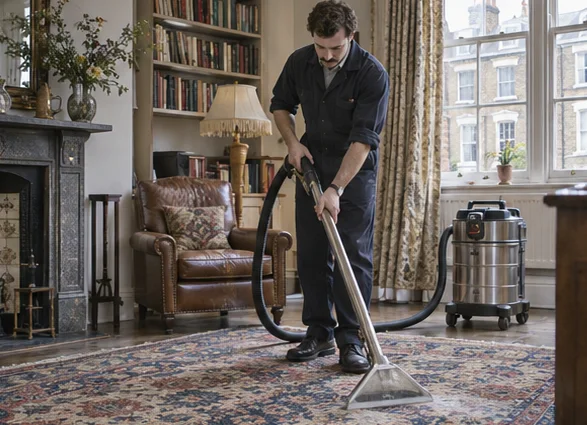
When we see a low, woven rug
A flat rug can look simple because there is no standing pile to inspect, but the way the yarns are woven and finished still affects the service. We examine an accessible corner, the border and the texture of the face. We also consider what is directly below it. A rug over a timber floor may need a different working arrangement from a similar piece sitting across fitted carpet.
Tell us how the piece is normally laid. Some reversible rugs are turned frequently, others have spent years with the same side up. We ask which face carries the marks and which has stayed against the floor. If you want both faces considered, include that in the enquiry. Assessing two surfaces does not mean we will use the same treatment on each one.
If a large piece is under a bookcase or the bed, send a wider photo. We can discuss whether there will be enough room to see the relevant edge and work on the agreed surface. This helps us quote for what will be accessible on the visit and plan where the rug can stay afterwards.
- Identify the usual face. Tell us how long each side has been exposed.
- Describe the flooring. Include any separate rug grip, pad or mat.
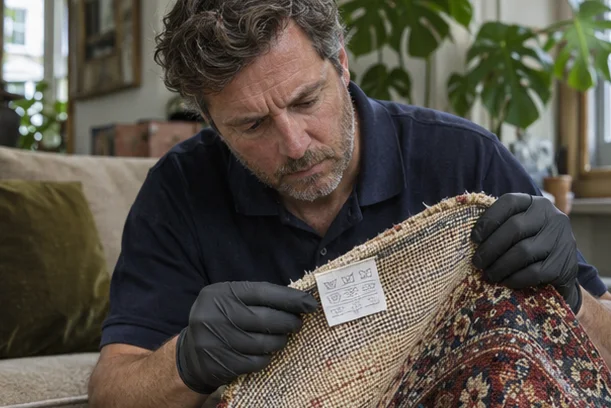
Interpreting a care label or a worn underside
We ask what the maker says about cleaning if there is a label. In some homes you may have a receipt or care note that names the materials even if the rug has lost its label. Show us whatever is available. Construction matters as well as the fibre name, particularly if a base fabric or edging is made differently from the visible weave.
A flatweave without a thick base can show evidence of a spill on its underside. That can help us identify which area we need to discuss. It does not automatically mean a second application is appropriate. We consider the movement and stability of the material and explain what we can do before we begin.
If you have previously changed which side faces up because one face wore differently, let us know. A thread may be worn or a circle of fading may have become visible over time. We use that history to compare the condition of the two surfaces and decide which areas may need to be excluded.
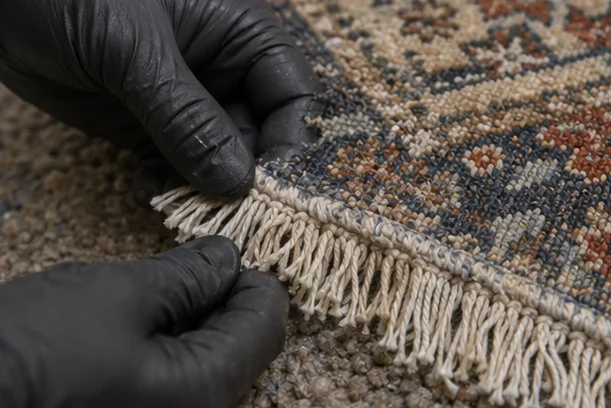
Checking the edges that hold a flatweave together
We look for fraying, pulled yarns and joins where the rug has been folded. The ends can have a woven border, tassels or a separate binding. We assess that finish alongside the main material, particularly when an edge has started to open or it was repaired with a different thread. Tell us if it catches on the floor or a doorway as you move the rug.
With a long, narrow textile we examine the sides as well as the ends. Narrow edges often have uneven wear according to the direction people usually walk. When one length spends its time close to a wall, its texture and colour can differ from the side near the footpath. We discuss what that means for the result before treatment.
If one thread appears to be coming loose, show us both sides of that area where possible. We can explain whether a specific part of the piece should stay outside the work. This helps us plan around weak parts and focus the appointment on what we can assess and treat safely.
- Show us the border where the wear starts
- Mention any recent sewing or repair at an edge
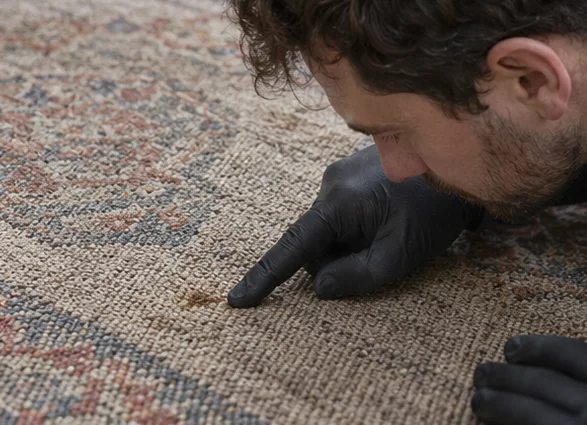
Seeing whether a mark passes through the weave
Tell us what caused a spill if you know it and which surface it first landed on. We inspect the mark and ask what was done afterwards. Soiling, a mark left by something underneath and a change in colour can be hard to distinguish if we only see one face. Showing both sides can help us identify the appropriate questions before we discuss treatment.
A faint mark in the same place on both sides does not guarantee that it will respond to cleaning. We look for residue and check the colour, condition and materials. If the area has changed after the application of a spray or cleaner, tell us the name of the product. We can take that into account when considering what is safe.
When the rug has different colours in adjacent yarns, we assess the change across that area. Marks can appear different depending on the angle of the light and the background below the textile. We explain our findings and discuss what can reasonably be attempted on the material without promising full removal.
- Share a close photograph of both faces of the affected area
- Describe earlier products and any change in feel or colour
What we can agree after inspection
We choose an appropriate approach only after seeing the material and the working space. Extraction is an option for suitable constructions and dyes. If there is an uncertain finish or a weakened part of the rug, we may suggest a more limited treatment or recommend that the affected area be left alone. We agree this before starting.
We need to know where the rug can stay until the treated surface dries. Ask about that step if you normally place it at an entrance or in a room used as a route through the home. Reversing or covering a rug too soon can make the plan impractical. We discuss the likely timing after the material, method and room conditions are known.
If a piece currently sits on a slip-resistant mat, mention whether the mat will stay in position or be available to lift. We assess the rug and the surface underneath. A separate grip or underlay changes what we can see and may affect the choice of a working area.
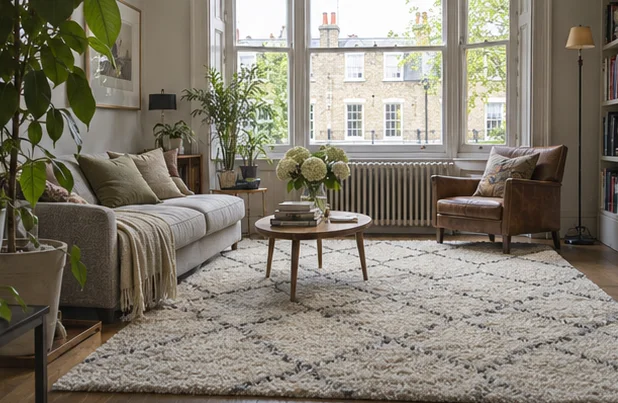
Rug cleaning specification
| What we inspect | What it tells us | What to share before booking |
|---|---|---|
| Both faces | Exposure, wear and whether a mark appears through the weave | A photograph of each face when accessible |
| Woven edge | Whether there are repairs or vulnerable yarns | Location and history of any fraying |
| Separate underlay | How the rug sits and what surface is beneath it | Whether it can be moved and the floor finish |
| Care note | Whether the maker places any limits on treatment | Readable image of the label or instructions |
Planning cleaning around the rest of the room
Please tell us if furniture needs to be moved before we come and who will be moving it. A flatweave can wrap around heavy table legs or be held in place by a dresser, even if most of it is visible. We discuss how to reach the relevant area and whether the available space is enough.
If you also want the fitted floor covering cleaned, ask us separately about carpet cleaning. Tell us if the fitted carpet is accessible before the rug goes back. The two surfaces require separate assessment and enough time to dry if both are treated.
Tell us if the rug is being put back after a move or room rearrangement. We can talk through the order of work so the textile is available for inspection and the room has enough clear space for the agreed visit.
Checking a booking in Highbury
Send us your full postcode so we can confirm service coverage for the address. Add the floor number and the entrance you expect us to use. If access is via stairs or a narrow gate, say so before we book so we can discuss the route for equipment.
Add photos of the label, any edge damage and the floor where you expect the work to happen. If the piece is a reversible rug, show each face in the same light if you can do so without moving furniture or handling a damaged edge.
Customer questions
Can you look at both sides of my Highbury flatweave?
We can assess the two faces if they are safely available. Tell us how the rug is used and which surface has marks so we can discuss work on each separately.
What if there is no label on the rug anywhere?
Share a photo of the surface and the underside and tell us what you know about its origin or materials. We explain what we can assess and when uncertainty limits the service.
Can I ask you to treat a mark with a repair right beside it?
Let us know where it is and what you know about the repair. We consider the condition and the material before agreeing whether that part can be worked on.
Why does a stain look stronger on the reverse?
Give us a view of each side and describe what spilled. We assess the weave and the mark together before agreeing whether treatment from either side is appropriate.
Can a rug be turned as soon as the face dries?
We discuss when the rug can go back into use after assessing the piece and the treatment. The underside and the floor need to be considered as well as the face.
Do you need the complete Highbury postcode before you quote?
Please send it so we can confirm the address is within coverage. Add any access requirements and photos of the rug so we can discuss the visit.
Nearby areas
Check rug cleaning coverage and book an assessment
Send your Highbury postcode, rug measurements, pictures of both faces and details of what it lies on. Point out marks, repairs or loose ends you want us to look at.